Website Rescue ·
Your Web Agency Disappeared? How to Take Your Website Back
Short answer: you can almost always take your website back — or rebuild something better faster than you think. Start with the domain: a two-minute WHOIS lookup shows who really owns your address, and if it is registered in your name, the registrar can restore access within days no matter how completely the agency vanished. Hosting can be replaced, content can be recovered from backups or the Internet Archive, and an abandoned Google Business Profile can be reclaimed through Google’s own ownership process. Here is the full rescue, step by step — from a team that has done it for real clients, including one that went from months of silence to 70+ calls a month.
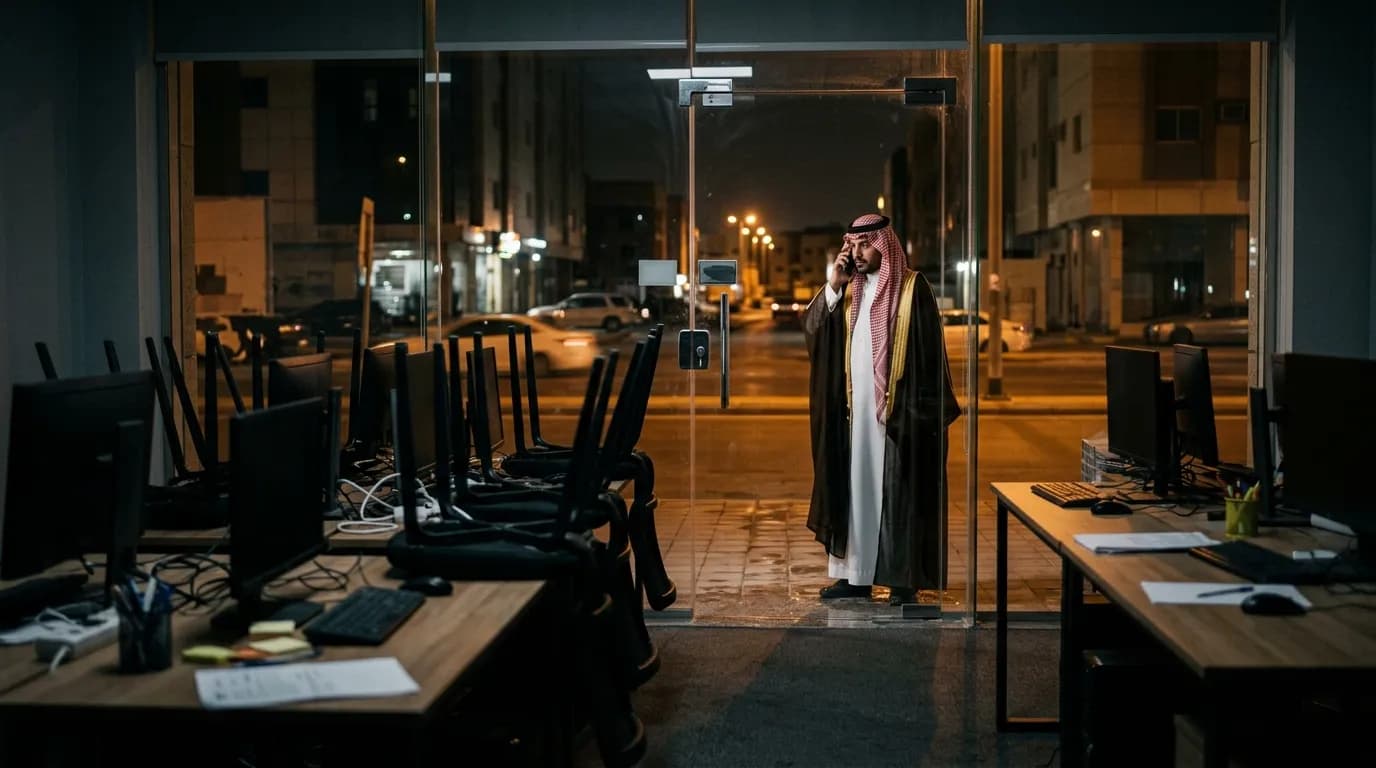
It usually starts quietly. Replies take a little longer each week. Then the WhatsApp messages stop being read. Then one day the website is down, or you need one small change and realise nobody in your company has a single password. We hear a version of this story from Saudi businesses almost every month — a freelancer who moved abroad, an agency that shut its doors, a "company" that turned out to be one person with a laptop. Here is what that panic actually is, most of the time: one or two missing passwords. Not a catastrophe. The recovery is more procedure than drama, and it starts with a diagnosis.
First, work out what actually happened
"My website disappeared" means one of three different things, and each has a different fix:
- The address shows a "domain expired" or "this domain is for sale" page → the domain registration lapsed. This is the urgent one — act within days, not weeks.
- The address shows a hosting error or "account suspended" page → the hosting lapsed or was switched off, but the domain itself may be safe.
- The website looks fine, but nobody can edit it and the agency is unreachable → an access problem. Annoying, but the easiest of the three.
Whichever it is, resist the urge to keep messaging the agency. From here on, almost every step works without their cooperation — which is fortunate, because you are reading this precisely because they stopped cooperating.
The five keys: what the agency might be holding
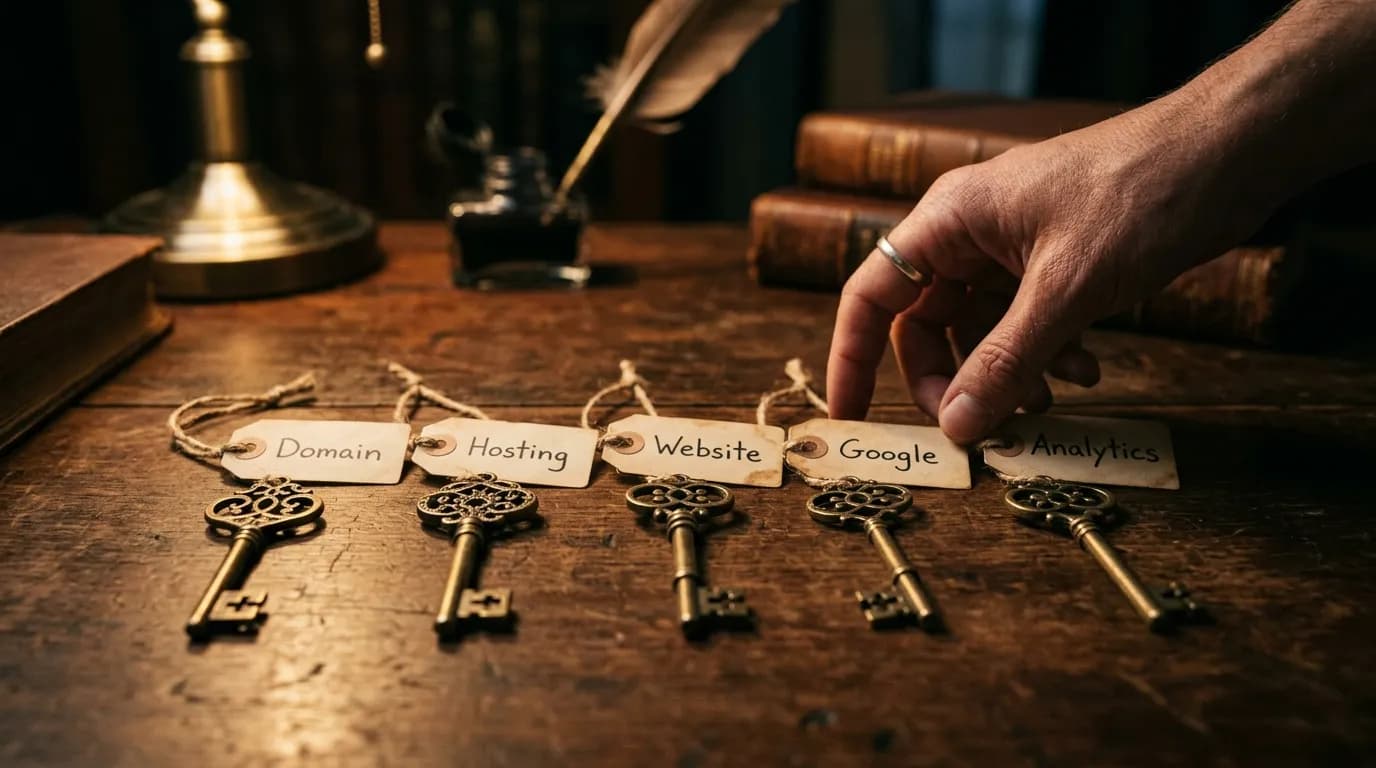
A website is not one thing — it is five separate assets, usually held in five separate accounts. Run this audit before contacting anyone, so you know exactly what to ask for:
| The key | What it controls | How to check who holds it |
|---|---|---|
| Domain name | The address itself — lose it and everything attached goes with it | WHOIS lookup (whois.com) — read the registrant name and email |
| Hosting | The server your files live on | Check your bank statements — who actually pays the hosting company? |
| Website admin | Editing content, products, prices | Do you have a working admin login for WordPress, Salla, or your platform? |
| Google Business Profile | Your map listing, reviews, and the calls it brings | Search your business on Google Maps — if you see "Own this business?", you don’t manage it |
| Analytics & ad accounts | Your data, pixels, and campaign history | Can you log in as an admin with your own email — not theirs? |
Most "disasters" turn out to be one or two missing keys, not five. And the keys are independent: you can reclaim your Google Business Profile today even if the domain fight takes a month.
Step 1 — take back the domain. This is the one that matters.
Everything else is replaceable. The domain is not: it carries your Google rankings, your email addresses, and every business card you ever printed. Run the WHOIS lookup first, then follow the branch that matches what you find:
- Registered in YOUR name or your company’s → you own it; you just lost access. Contact the registrar’s support directly (the company named in the WHOIS record), verify your identity — usually billing details or company documents — and they will reset the account. Days, not months.
- Registered in the AGENCY’S name → gather evidence: your commercial registration, trademark certificate if you have one, invoices showing you paid for the domain, and any messages where they acknowledged it was yours. Call the registrar — call, don’t email — and open an ownership dispute. For .com and other international domains, you can escalate to ICANN if the registrar stalls.
- EXPIRED → move today. Most registrars offer a grace window where the original owner renews at the normal price, then a redemption period with a recovery fee, and after that the domain can go to public auction — where someone else can legally buy your business’s name.
The .sa rule that quietly protects Saudi businesses
If your domain ends in .sa or .com.sa, the rules are stacked in your favour. Saudi domains are managed by SaudiNIC under the Communications, Space & Technology Commission, and a registrant must prove a relationship to the name — a commercial registration, a registered trademark, or a trade name. They are also effectively non-transferable except when a business is sold or merged. In practice: if your .sa domain was registered against your CR, the agency never owned it — they only managed it, and your registrar can restore control with your CR as proof. It is one of the few situations where paperwork works entirely for you.
Step 2 — hosting: recover it, or honestly, just replace it
If the hosting charge appears on your own card or bank statement, you are the customer — and the customer on record wins. Call the hosting company’s support, verify the billing details, and they will restore your access even if the developer changed every password and email on the account.
If the agency paid for hosting from their own account, think twice before fighting for it. Hosting is a commodity that costs a few hundred riyals a year; your files are what matter, not the server they sit on. Send one written request for a complete backup of your site, keep a copy of that request, and open your own hosting account in parallel. Whatever you do, do not start paying the vanished agency’s "maintenance fees" again just to keep the site alive — that is renting your own business back.
Step 3 — rescue the content
Even when a site is completely gone, more survives than people expect:
- The Wayback Machine at archive.org keeps public snapshots of most websites. It will not give you a working site, but it recovers your text, images, page structure, and prices — a reference copy of everything you wrote.
- Your own archives: product photos on your phone, the catalogue PDF, the brochure file, old emails where you sent the agency content drafts. You wrote most of your website once already.
- If you ran a store on Salla or Zid and the store account is yours, your product data, orders, and customer list are safe on the platform regardless of what happened to the agency.
- The agency’s backup: one polite, written request. Sometimes the person who ghosted you for months will still send a ZIP file to close the chapter.
Here is the honest reassurance: the slowest part of any website project is collecting content. A rescue where the text and photos survive is already half-built — which is why rebuilds run two to six weeks, not months. If the old site had Google rankings worth keeping, rebuild against our redesign-without-losing-rankings checklist so every old URL redirects properly.
Step 4 — reclaim your Google Business Profile. It may be worth more than the website.
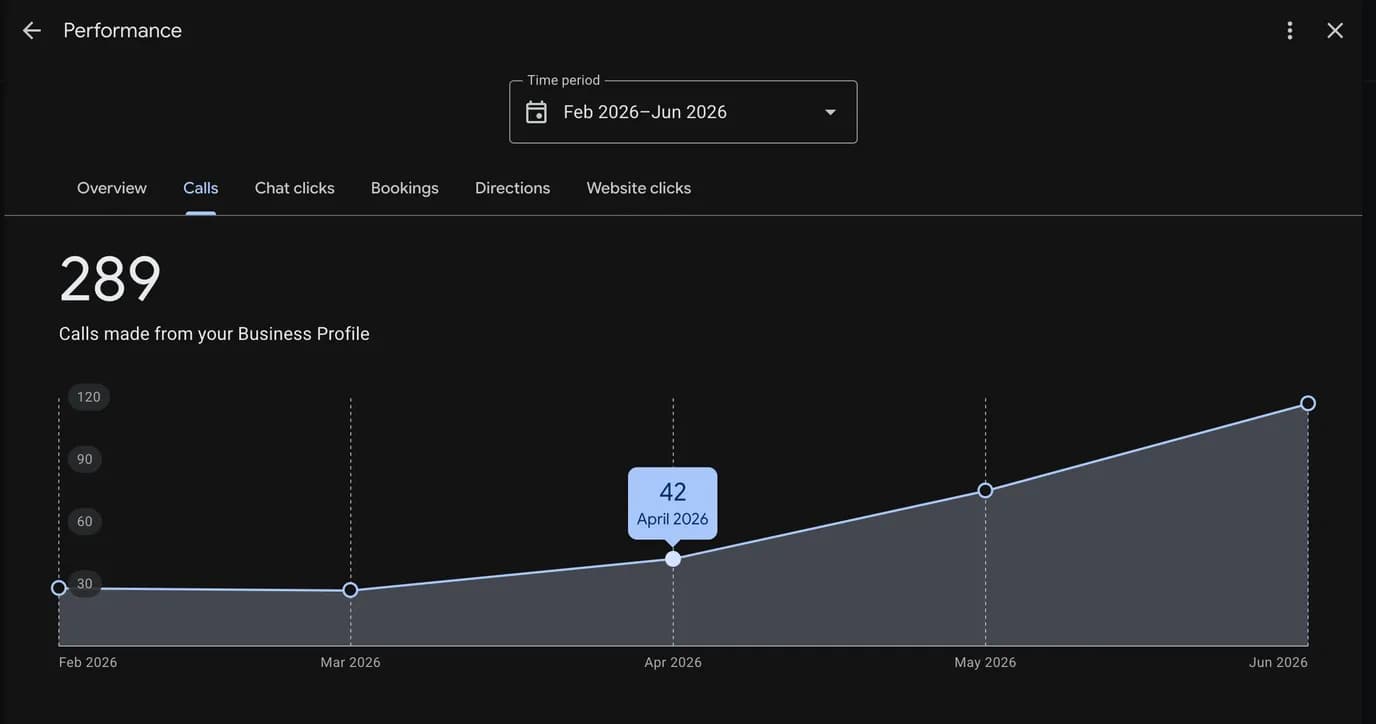
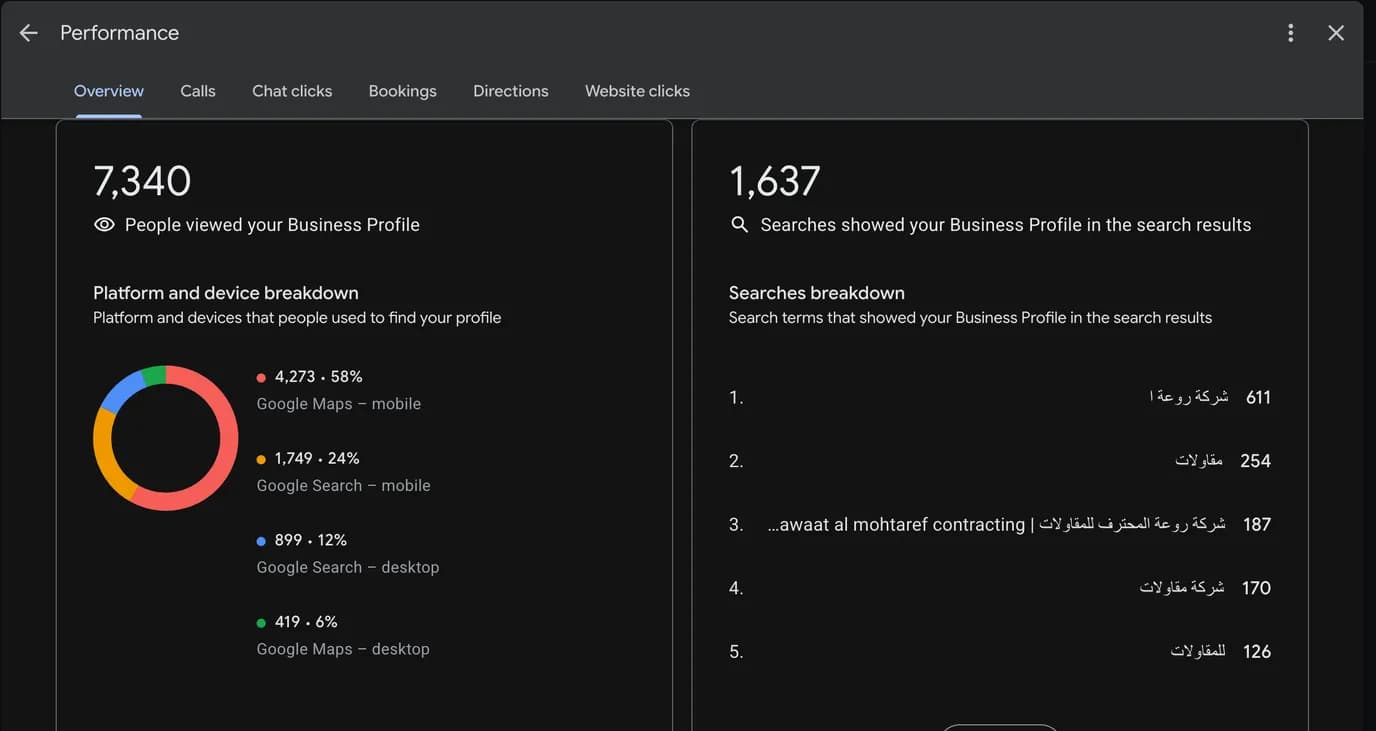
This is the step almost every guide skips, and for a Saudi service business it is often the most valuable asset on the list. Rawaat Al Mohtaref, a construction company, came to us after their previous agency ran a few ads and then abandoned them — months without leads, solid work invisible in search. The website was actually the smaller problem. We rescued and rebuilt their Google presence starting with the Business Profile, and it produced the company’s highest-ever enquiry volume: 70+ calls in a single month. Every one of those calls came through a profile their old agency had left for dead.
Reclaiming a profile has an official process. Find your listing on Google Maps and look for the "Own this business?" link. Follow it and request ownership. Google notifies the current owner — often the agency’s dead email address — and gives them 3 days to respond. If nobody answers, you can typically claim the profile yourself; if the request is denied, you can appeal with evidence that it is your business. While you wait, you can still suggest edits to fix anything dangerous, like a wrong phone number.
Do this in parallel with the domain work — the profile does not depend on the website, and for many businesses it is the faster route back to ringing phones.
Step 5 — change every lock
The rescue is not finished when access comes back. It is finished when the old agency’s access is gone:
- Rotate the passwords on the registrar, hosting, and website admin accounts — in that order of importance.
- Set the recovery email on every account to a company address you control, never an employee’s personal email and never the new agency’s.
- Remove the old agency’s users from your Business Profile, Meta Business Manager, and analytics — remove their access, but keep the accounts and their history. The data is yours and it is valuable.
- Write a one-page access sheet: each account, where it lives, who pays for it, and when it renews. Ten minutes of writing that prevents this entire article from happening again.
If the agency reappears asking for money
Be honest with yourself about which situation you are in. If there are genuinely unpaid invoices — work delivered against an agreed price — that is a debt, and the professional move is to pay it, even if the relationship ended badly. What you have already paid for is yours, full stop.
But a "release fee" or "transfer fee" invented after the fact, for assets you already paid to build, is hostage-taking. Negotiate once, in writing. If the agency is a registered Saudi company, you can file a complaint with the Ministry of Commerce. And run the honest calculation before spending months on the fight: professional websites start around SAR 1,500 — the full cost breakdown is on our guide — and sometimes the winning move is to keep your domain, walk away from everything else, and let them hold a website nobody visits. Keep records of everything; post accusations nowhere.
Make sure this never happens again
Whoever builds your next website, put these six lines in the agreement before any design work starts:
- The domain is registered in your company’s name, under your email, paid with your card. The agency can manage it; it can never own it.
- You pay the hosting company directly, even if the agency sets it up.
- You receive owner-level admin access to the website from day one — not "we’ll add you later".
- You are the primary owner of the Google Business Profile; the agency works as a manager.
- A one-page handover document lists every account, login, and renewal date.
- You receive a complete copy of the website at launch, and after every major update.
A serious agency volunteers all of this without being asked — it is exactly what we put in writing for every client, and the projects in our portfolio stay linked to live client sites because the clients own them. An agency that resists this list is answering a question you have not asked yet.
The whole rescue, in one paragraph
Run the WHOIS lookup today and start the domain recovery — that is the asset that cannot be replaced. Request ownership of your Google Business Profile in parallel; the 3-day clock only starts when you do. Pull your content from backups, your own files, and the Wayback Machine. Open your own hosting account, rotate every password, and only rebuild what is actually lost. None of it requires the old agency’s permission. And if you would rather hand the whole rescue to a team that has done it before — recovery, rebuild, and the Google presence that brings the calls back — that is precisely the work we like most. Ask Rawaat.
Frequently asked questions
Can I get my domain back if the agency registered it in their own name?
Often, yes. Contact the registrar (the company in the WHOIS record) with evidence: your commercial registration, trademark certificate, invoices showing you paid for the domain, and messages where the agency acknowledged it was yours. For .com domains you can escalate to ICANN if the registrar stalls. For .sa domains the rules favour you strongly — registration requires a documented relationship to the name, such as your CR or trademark. If the domain is close to expiring, act within days.
My website is completely gone. Is anything recoverable?
Usually more than you expect. The Wayback Machine at archive.org holds public snapshots of most sites — your text, images, and page structure. Your own files (product photos, catalogues, content emails) cover much of the rest, and if you sold through Salla or Zid under your own store account, your products and customers are intact. You will need a rebuild for a working site, but recovered content is half the work already done.
How do I take over a Google Business Profile an old agency controls?
Find your listing on Google Maps, click "Own this business?", and request ownership. Google gives the current owner 3 days to respond; if nobody answers — common when the owner is a dead agency email — you can typically claim the profile yourself. If the request is denied, appeal with proof it is your business. Never create a duplicate listing; it competes with your own reviews.
Should I pay what the old agency is demanding to release my website?
Split it honestly: genuinely unpaid invoices for delivered work are a debt — pay them. Invented "release fees" for assets you already paid to build are hostage-taking — negotiate once in writing, complain to the Ministry of Commerce if they are a registered Saudi company, and compare the demand against simply rebuilding. Keeping your domain and walking away from the rest is often the cheaper, faster win.
How much does it cost to rebuild a website after an agency disappears?
Professional business websites start around SAR 1,500 and online stores from about SAR 3,500 — and a rescue rebuild is usually faster than a from-scratch project because the recovered content already exists. We publish a detailed cost guide on this site with real prices in riyals for every type of build.
How long does a website rescue take?
Domain recovery through a registrar typically takes days once you provide proof. The Google Business Profile ownership request runs on a 3-day response window plus verification. A full rebuild takes two to six weeks. The fastest cases — where the site is fine and only access was lost — are measured in days.